Showing posts with label drawing. Show all posts

Sunday, December 4, 2016

Busy Month in Studio and a word about Clipping Masks

November has been a busy month for product photography. With Christmas right around the corner it's been a mixed bag of Amazon work and some specialty work. I have been doing quite a bit with clipping paths for custom ads and other uses.

 Clipping paths "knock out" the background
allowing the graphic artist to use special colors
or  images with the photo.
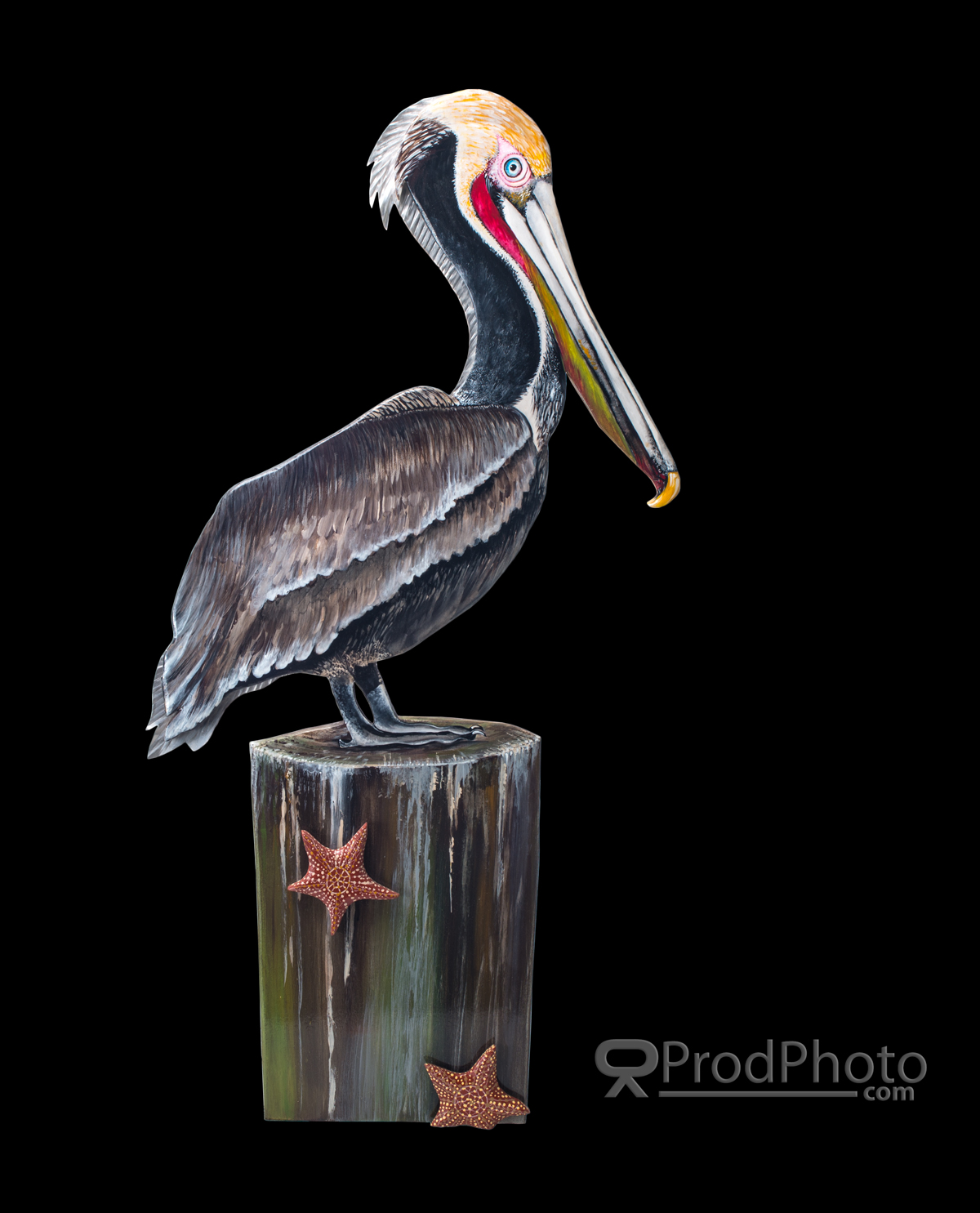
 Here I inserted a black background.

 Here a white background.

Here the product is left on the original white sweep.

Clipping masks do add a considerable cost to processing as I spend about an hour or two to take each image element away from its backdrop the more complex the image the more time involved.
When should you consider a clipped image? If your image will be printed on different colors like a coffee mug or a shirt; will be used in several different media like a printed ad or banner graphic with other graphic elements applied. I quote each project on an individual basis so fees do vary from image to image. Contact me through my website at www.ProdPhoto.com for more information or to request free quote.

Painted Sea Art from the collection of Jennifer Rogers.

Sunday, September 14, 2014

Artwork Reproduction

Another facet of the business is to photograph other peoples art , in this case, for reproduction as a color plate in biographical book about the artists of Woodstock, NY. The art must be evenly lit, show the texture of the medium in this case oil on canvas, be color accurate, and of course, be perfectly square with no distortions. The more you can get right in the camera; the less you'll have to do in post.

The painting is roughly 28"x34". Ideally I would use a 200mm lens and move back far enough to fill the frame of my D600 Nikon. Unfortunately this configuration is pushing me beyond the size limits of my small studio. The alternative is to switch to my 28-70mm set to 70mm and moving the camera to fill the frame. This will introduce a small amount of distortion which you would normally not notice but with a rectangular object close to the edges of the frame, its obvious but fixable in post.

Next problem is the sensor plane must be perpendicular to the canvas to prevent any keystone distortions. The painting is on an easel tilted back therefore the camera needs to be positioned high and tilted down.

Now that the camera and painting are in position, its time to bring in the lighting. Dried oil paints are very shiny and often have lots of texture which creates a lot of unwanted specular highlights. The goal is to get rid of the speculars but not loose the texture and brush strokes. This was solved by raising the key light very high and directly above the subject, moving most of the specular reflections below the angle of the camera and giving some relief to the texture because of the side lighting. Distancing the light source helps reduce the light fall off. The addition of a 40" silver reflector under the painting bounces just enough light back to the bottom to even out the lighting.


D600 24-70mm @70mm, 1/160, f/8, ISO 100
Artist: Nan Mason, 1932

Color correction done with a gray card along with minor contrast and distortion adjustments in post complete this project.

Monday, August 25, 2014

Antique Art

Part of what I do is to accurately reproduce antiques for auctions often times these drawings and sketches are behind glass making it difficult to photograph without reflections. Not only is the correct color important the art can not be distorted and must be photographed  perpendicular to the film/sensor plane. The only way to prevent reflections is to shoot in a darkened studio with lighting carefully placed as to not reflect back into the camera. In  this case the owner wanted the detail of  the pencil handwriting in the upper left and lower right photographed separately and ledgibly. The solution is to position the lights so they light the subject  but the light reflected off of the glass bounces off and away from the lens. By hanging the art on the wall and lighting from above with a large soft box the incident of reflection sends the reflected light to the non-reflective floor covered with black paper where most of the light is absorbed. Very little light is bounced into the studio leaving nothing to reflect.
Here are the finals after a small amount of contrast adjustment in Photoshop.